We buy cars every week and turn down far more than we buy. Not because of any special eye for it, but because we always work through the same order and never skip a step just because we like the car. That is the whole trick: hurry is what makes people buy badly.
This guide is written for you to use wherever you buy. It starts at home, continues wherever the car is, and ends — if everything holds up — at a workshop that belongs to neither you nor the seller.
Start with the paperwork, from your sofa
Before you drive forty minutes to look at a car you can rule out half the bad adverts without leaving the house. Ask the seller for the registration and the chassis number, then pull the vehicle's history. What matters is short:
- How many registered keepers it has had, and how long the current one has owned it. A car that has changed hands three times in two years did so for a reason, and it is rarely a good one.
- Whether it carries any charge. A vehicle with a live finance agreement or a lien cannot be put in your name until that is cleared. It can be cleared, but only with the settlement figure in front of you and before you pay anything.
- The ITV history: dates, results and the mileage recorded at each inspection. It is the cheapest way there is to spot a wound-back odometer.
- Whether it was a hire car, taxi, driving-school car or private-hire vehicle. None of those rules a car out, but each changes what you should look at and what it is worth.
The mileage that matters is not the one on the dash
Compare the odometer against the figure recorded at each ITV and against the actual wear: steering wheel, gear knob, pedals, driver's seat bolster. A low-mileage car with a brake pedal worn through to the metal is telling you something, and it is not what the dash says.
Bodywork: look at the gaps, not the paint
Shiny paint tells you nothing; a freshly polished car shines whatever its condition. The panel gaps tell you a great deal. Crouch at one corner of the car and sight along the flank with the light raking across it.
- Gaps between bonnet, wings, doors and tailgate should be the same width top to bottom. A gap that opens out at one end means a panel has been off, or a knock has been pulled straight.
- Colour and texture should match across every panel. Open the doors and look at the shuts and the frames: that is where a respray shows.
- Look for overspray or a gritty texture on rubber seals, on trim strips and under the boot weatherstrip.
- Open the bonnet and look at the hinge and wing bolts. Chipped paint on a bolt head means that panel has been unbolted.
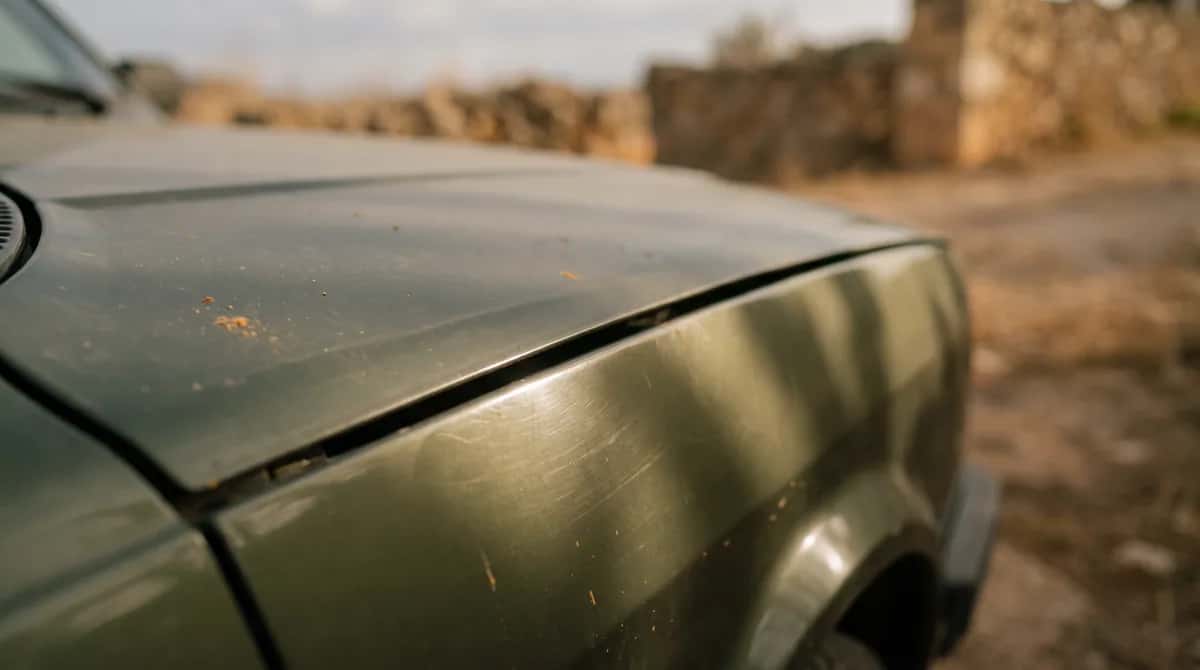
A repaired car is not a rejected car. Nearly every used car has a painted panel somewhere. What you want to know is whether the repair was a car-park scrape or a knock that reached the structure — so look at the structure: the chassis rails in the engine bay, the boot floor under the spare wheel, and whether the wheel arches are symmetrical.
Underneath, the wheels, and anything wet
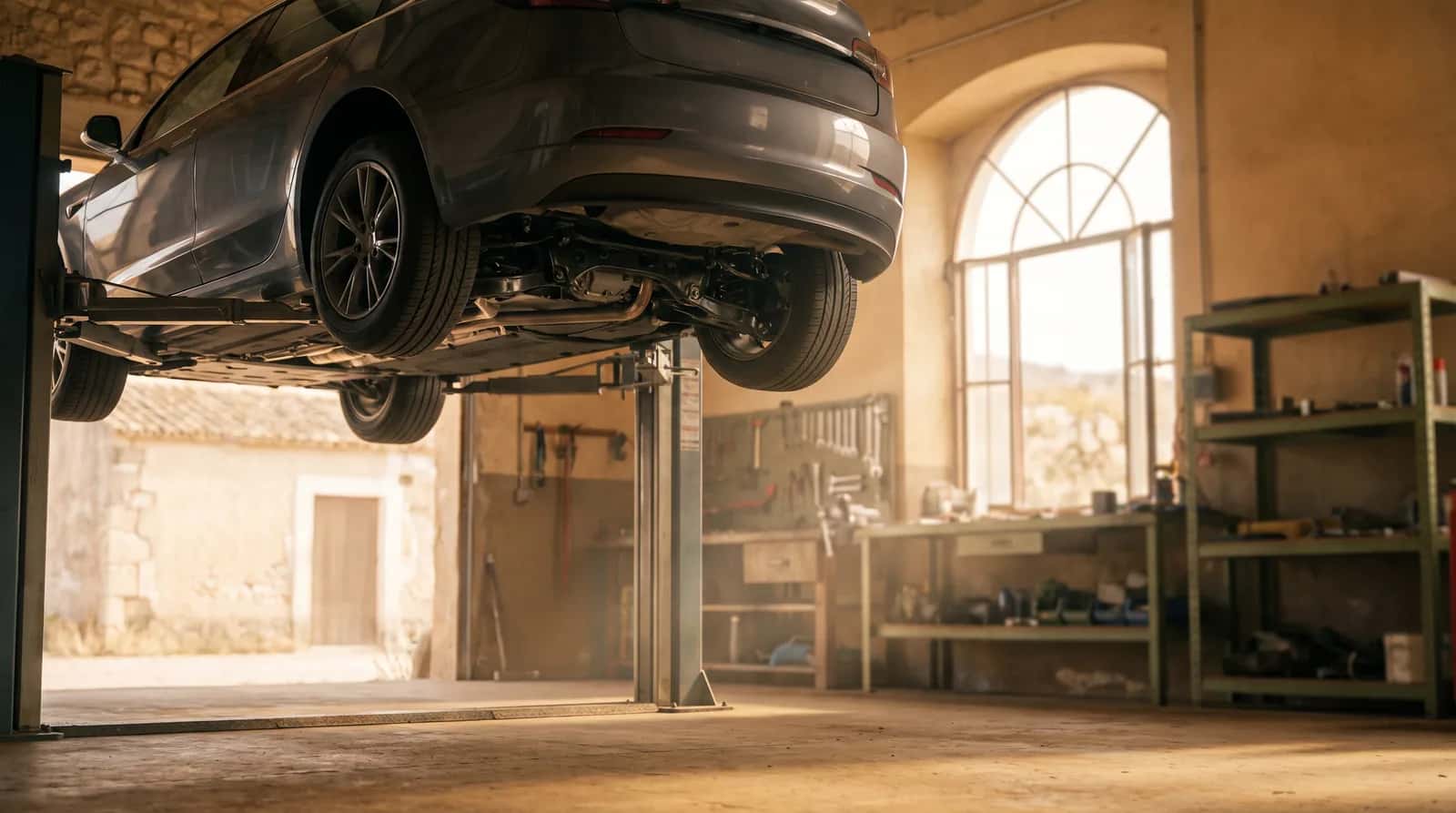
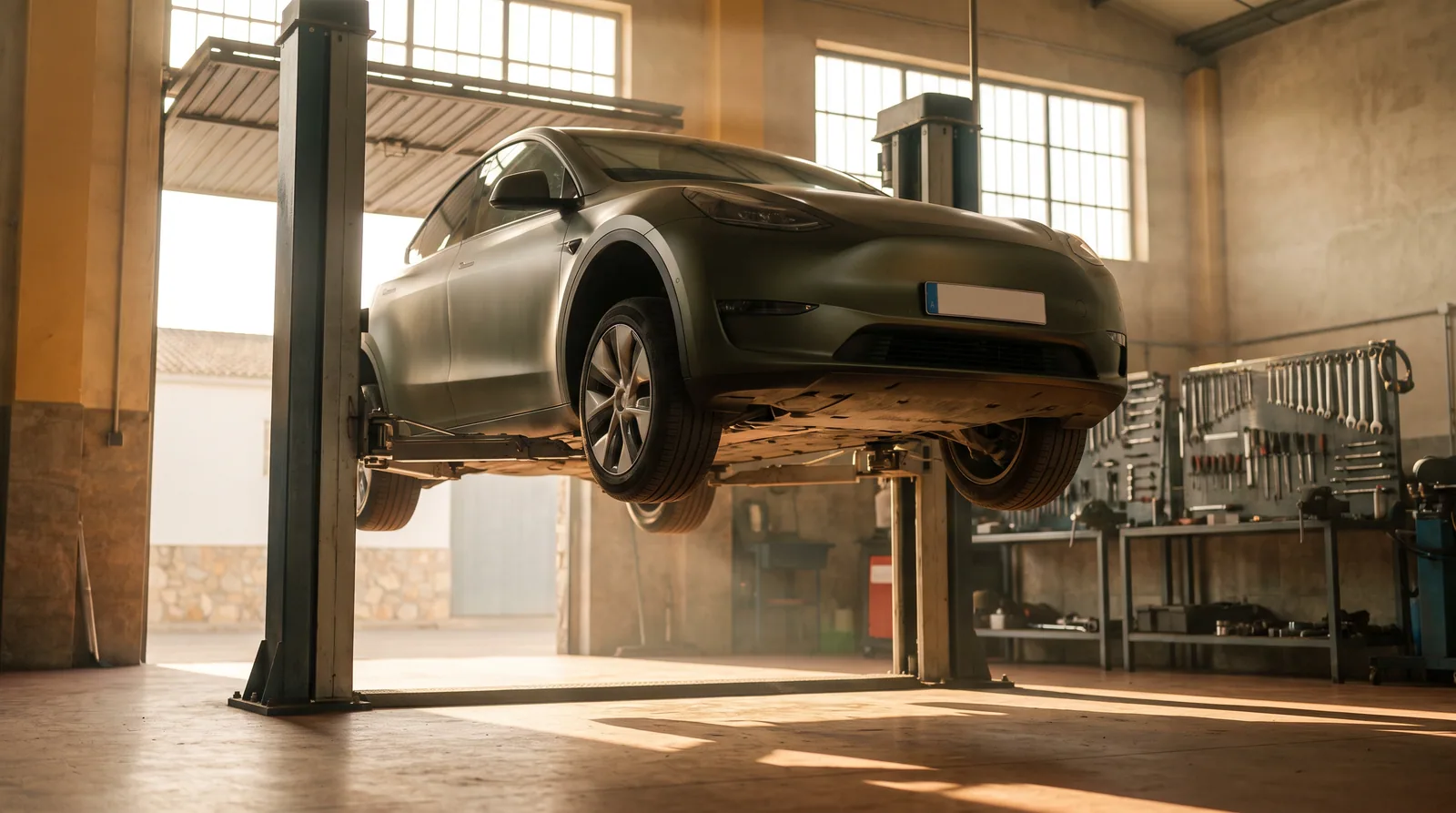
On a lift is best. Failing that, a torch and a willingness to kneel down will show you more than you expect.
- Fresh oil on the engine, the gearbox and the dampers. A dry, dusty stain is one thing; a wet drip is another.
- Surface rust underneath is normal on an older car. Flaking, scaly rust on the chassis rails or on suspension mounting points is not.
- All four tyres: brand, size and date code. Four different tyres, or two new fronts and two rears down to the markers, tell you how the car has been kept.
- Tyres worn on the inner or outer edge point at steering or suspension, not just alignment.
- Brake discs: a pronounced lip around the outer edge means there is not much disc or pad left.
The interior tells you the car's life story
Sit in it and touch nothing for a minute. Smell it. Damp and mould are not masked by an air freshener, and a musty smell almost always means water is getting in somewhere: windscreen, sunroof, scuttle drains or a floor grommet.
Then test everything, one thing after another, without rushing: all four windows, electric mirrors, air conditioning genuinely cold and heating genuinely hot, lights, indicators, wipers, radio, camera if fitted, and every warning light on the dash when you switch the ignition on. They should all light up and then go out — one that never lights at all has usually been disabled deliberately.
The engine, always from cold
This is the one condition we do not negotiate on. If the car is already warm when you arrive, come back another day. A warm engine hides the start-up, and half the problems worth hearing are audible in the first ten seconds.
- Switch the ignition on without starting and wait for the lights to clear. Listen for the fuel pump, or the glow plugs on a diesel.
- Start it and listen to the first ten seconds: a rattle that fades as it warms, a squealing belt, a metallic knock.
- Watch the exhaust smoke immediately after start-up, then again with the engine warm and under load.
- With the engine off, take the oil filler cap out and look for pale emulsion stuck to the inside.
- Check the coolant level and colour in the expansion tank, and that it does not smell of exhaust.
And ask for the service book and the invoices. On a used car a thick folder of bills is worth real money: it reduces the risk for whoever buys it next, which at that moment is you.
The road test, and make it a long one
Five minutes around the block is worthless. You need twenty minutes minimum, covering town driving, a hill and a stretch at motorway speed.
- Brake hard once, somewhere safe with nobody behind you. The car should stop straight, with no vibration through the wheel or the pedal.
- Let go of the wheel briefly on a straight road: a pull to one side points at steering, suspension or tyres.
- On a manual, use every gear including reverse, and try accelerating in a high gear at low revs to feel whether the clutch slips.
- On an automatic, watch how it takes first gear from cold and whether it jerks on downshifts.
- Go over a bump and listen: sharp knocks from the front axle are usually drop links or bushes, and they are cheap; a rumble that changes as you turn is not.
If it is a 4x4, three more things
A used off-roader has mechanical parts a hatchback does not, and they are exactly the parts nobody tests on a lap of the block.
- Engage and disengage four-wheel drive as that car's handbook says to. It should go in without odd noises, and the dashboard should respond.
- If it has a low range, select it — stationary or crawling, as appropriate — and check that it engages and comes out again without a fight.
- Look at the towbar and the area around it. A 4x4 that has pulled a heavy trailer has worked harder than its mileage suggests, and that shows up in clutch, transmission and cooling.
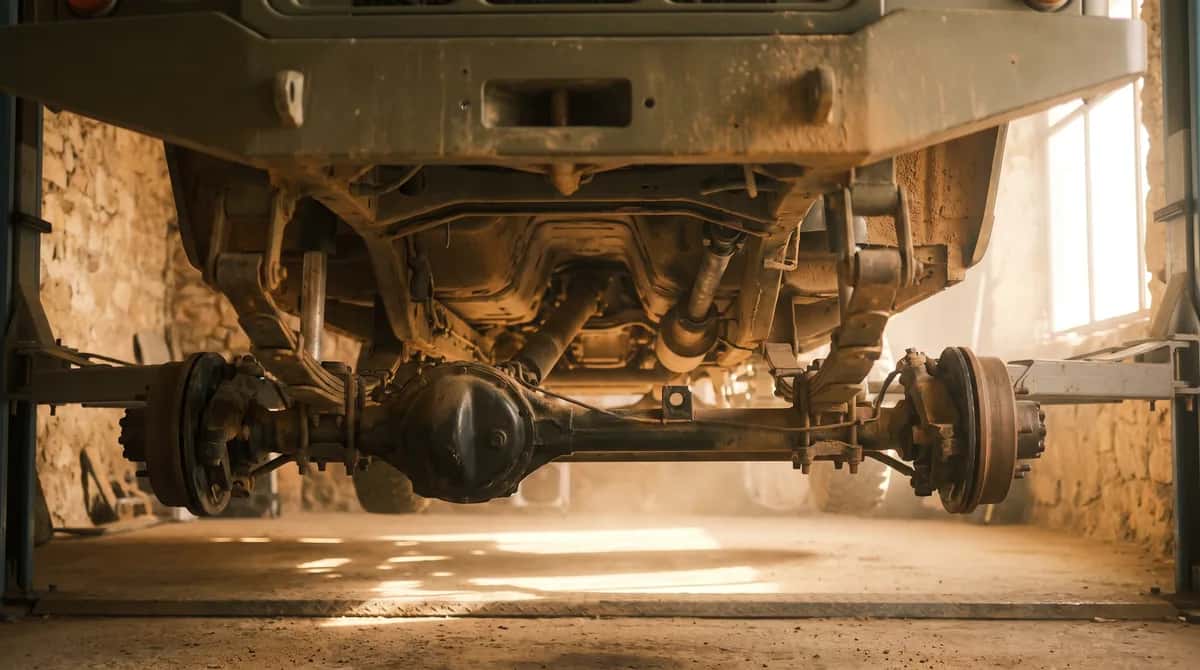
If this is the kind of car you are looking at and you are still weighing up body styles, the difference between a 4x4, an SUV and a proper off-roader changes quite a lot of what you need to check.
Finally, a mechanic who does not work for the seller
If a car has got this far, take it to an independent workshop and have it looked at on a lift. It costs very little against what you are about to spend, and it is the one check that stands in for all the others.
A seller who is reluctant to let your mechanic look at the car has just given you the most useful piece of information in the whole transaction.
We say so on our transfer and warranty included page and we will repeat it here, because it suits us: we would rather you had the car inspected before you buy it. A car that passes a third party's inspection is a car that does not come back with a surprise three months later. If the one you are interested in is on our forecourt, it will be in the cars in stock, and you are welcome to bring whoever you like to look at it.